Background: Since November 2024, the Yusufu Bala Usman Institute has been conducting research on Land Governance, Ecology and Insecurity in Four States of Northern Nigeria: Kaduna, Katsina, Jigawa and Bauchi. The two year project is being funded by the UK FCDO (Foreign and Commonwealth Development Office) under its SPRiNG Programme (Strengthening Peace and Resilience in Nigeria) and is administered by Tetra Tech, an international development organisation. The research involved sending teams of researchers to the field in the four target states to collect information from farmers and pastoralists about the conditions affecting their livelihoods, including their access to land, grazing reserves and cattle routes, as well as the impact of climate change and ecological conditions. Both qualitative and quantitative data were collected and analysed. The aim of the project is to establish the empirical evidence for implementing measures that will reduce conflict and result in improved security and improved livelihoods for rural dwellers.
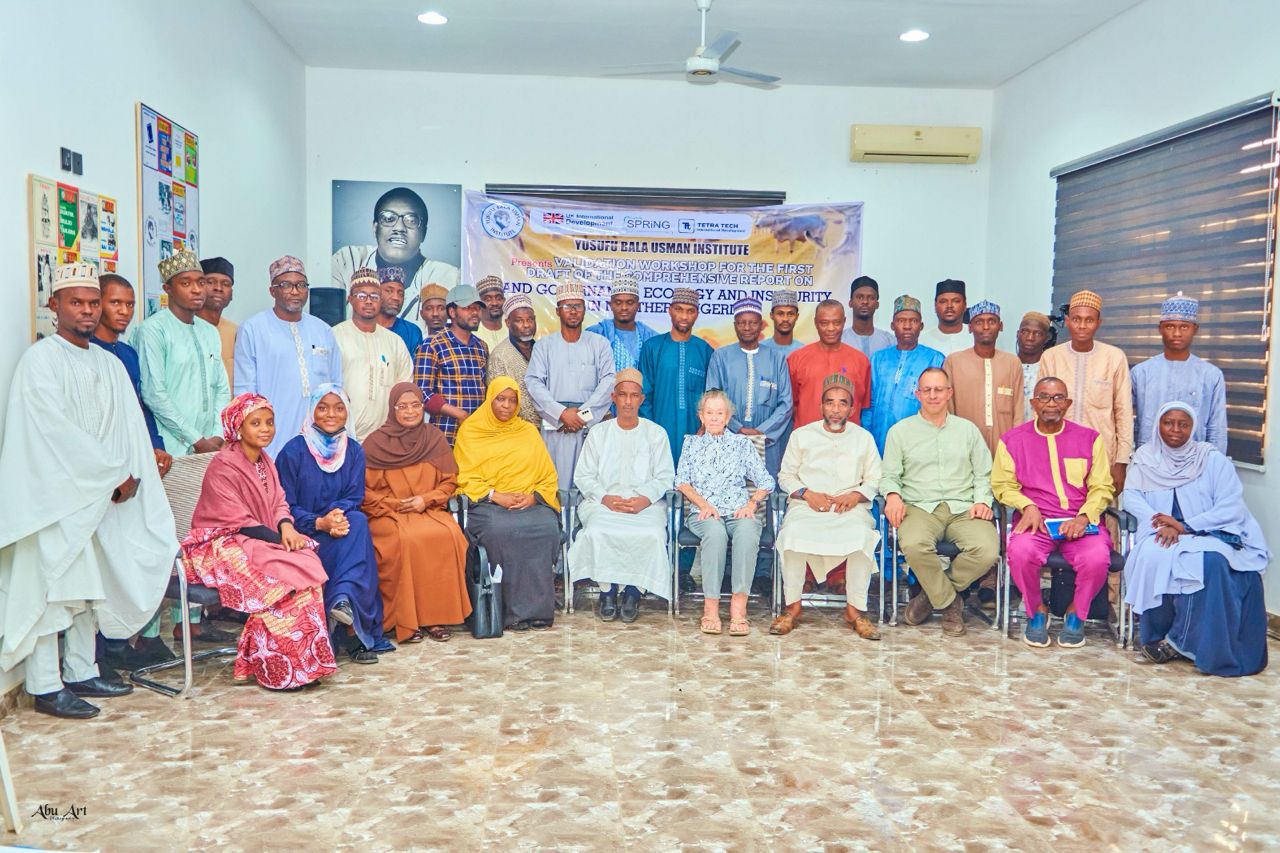
On Thursday, 26th February 2026, the Yusufu Bala Usman Institute hosted a Validation Workshop on the First Draft Report on Land Governance, Ecology, and Insecurity in Northern Nigeria (Bauchi, Jigawa, Kaduna and Katsina state).
The presentation of the draft report was delivered by Adam Higazi, who led participants through the key findings, thematic sections, and emerging insights from the study.
The workshop brought together a wide range of academic practitioners, experts, and government representatives from all the states where the project is being implemented. Participants reviewed the initial findings, exchanged diverse perspectives, and contributed professional insights to strengthen the report’s evidence base.
This academic gathering provided a platform for robust discussion on key issues surrounding land governance, ecology, and security challenges in Northern Nigeria.
The inputs received during the session will be incorporated to ensure the final report is comprehensive, accurate, and reflective of the realities on ground.
The Institute appreciates the contributions of all attendees and remains committed to advancing knowledge that supports sustainable development and improved governance across the region.